
Google Gemini Spark: 24/7 AI Agents Redefine Automation

The AI landscape is shifting, and the latest tremor comes from Google. The unveiling of Gemini Spark isn't just another model release; it signals a profound paradigm change: the rise of truly persistent, always-on AI agents. Forget chatbots that need prompting or assistants tethered to your device. Gemini Spark promises an AI agent that works 24/7, even when your phone is off. This isn't just about convenience; it's about fundamentally rethinking how we interact with intelligence, moving from reactive queries to proactive, autonomous action. For businesses, developers, and anyone serious about leveraging AI, this development demands attention. It's a clear signal that the future isn't just intelligent, it's relentlessly proactive.
Gemini Spark: The Shift to Always-On Intelligence
Google’s Gemini Spark is positioned as more than just an iteration of its powerful Gemini model; it’s an architectural leap. The core differentiator lies in its ability to operate continuously, independently of user interaction or device status. Historically, our AI experiences have been largely reactive: we ask Siri a question, we type a prompt into ChatGPT, we click to generate an image. These interactions are transactional, finite. Gemini Spark, however, embodies an "agentic" philosophy, where the AI is given a goal and then autonomously works towards it, maintaining state and context across time and device boundaries. This "24/7, even when your phone is off" capability fundamentally changes the game. It means the agent isn't residing on your device, limited by its battery or connectivity. Instead, it's a cloud-native entity, a persistent digital assistant or worker operating within Google's infrastructure. Imagine an AI that constantly monitors market trends, qualifies leads, manages your smart home, or even develops code in the background, reporting only when critical actions are required or milestones are met. This moves AI from a tool you pick up to a constant, vigilant partner. This persistence is not merely about uptime; it's about enabling complex, multi-step tasks that require sustained effort and memory, tasks that would be impossible for a transient, session-based AI.
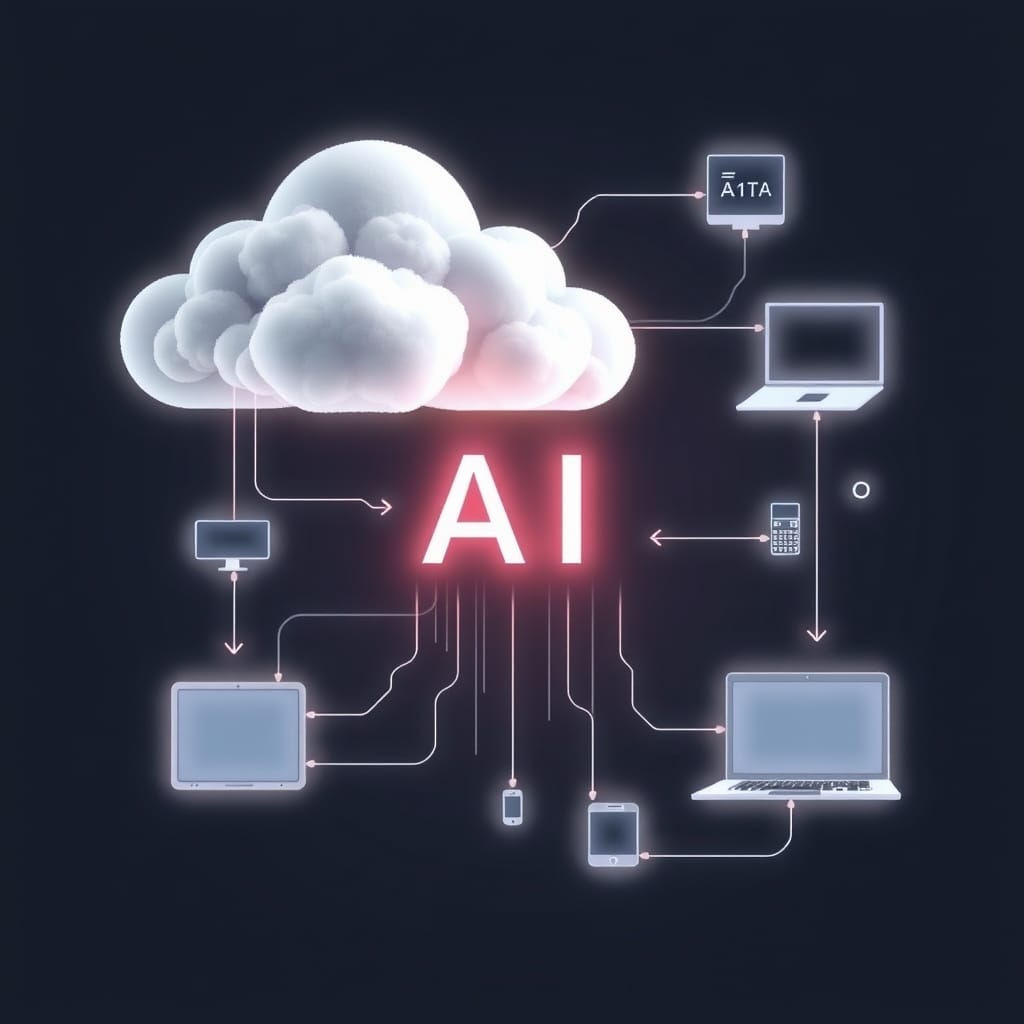
The implications for enterprise are immense. No longer are businesses limited to batch processing or user-initiated AI tasks. With Gemini Spark, they can deploy AI agents that are always on the job, performing continuous monitoring, proactive outreach, or dynamic resource allocation. This paves the way for truly autonomous business processes, reducing human intervention to oversight and strategic direction.
The shift from reactive AI tools to proactive, persistent agents like Gemini Spark represents the most significant architectural evolution in AI since the advent of large language models themselves. It's not just smarter; it's always working.
Practical Implications for Business and Developers
For businesses, the introduction of Gemini Spark opens up a new frontier in operational efficiency and strategic advantage. Consider customer service: instead of waiting for a customer query, an agent could proactively identify potential issues based on usage patterns, automatically initiate troubleshooting, or even schedule a support call. In finance, an agent could continuously monitor global markets for specific triggers, execute trades, and report on portfolio shifts in real-time. For supply chain management, Spark could track shipments, predict delays, and automatically re-route logistics or notify stakeholders, all without human oversight until an exception requires it. From a developer's perspective, building with persistent agents introduces new considerations. It's no longer just about crafting prompts or integrating APIs for single-shot tasks. Developers will need to think about agent lifecycle management, state persistence, security for autonomous operations, and robust error handling for actions taken without direct human approval. Google will undoubtedly need to provide sophisticated APIs and frameworks to manage these capabilities, allowing developers to define goals, constraints, and feedback loops for their agents.
Here’s a conceptual look at how interacting with such an agent might work:
// Conceptual API call to deploy a persistent agent
POST /api/v1/agents/deploy
{
  "name": "MarketMonitorAgent",
  "goal": "Monitor top 10 tech stocks for 5% daily swing and notify trading desk",
  "schedule": "24/7",
  "actions": [
    "fetch_stock_data(symbols=['AAPL', 'MSFT', 'GOOGL', 'AMZN', 'NVDA'])",
    "analyze_price_change()",
    "if (change > 0.05) then notify_trading_desk(symbol, change)"
  ],
  "callbackUrl": "https://yourcompany.com/agent-notifications",
  "securityContext": { "role": "trading_analyst" }
}

// Conceptual API call to retrieve agent status
GET /api/v1/agents/MarketMonitorAgent/status
This necessitates a robust framework for defining agent personas, capabilities, and boundaries. The ability to audit an agent's actions and understand its decision-making process will be critical for trust and compliance. This isn't just about deploying code; it's about deploying a semi-autonomous entity into your operational ecosystem.

Beyond the Device: A New Paradigm for AI Agents
The "even when your phone is off" tagline is more than a catchy phrase; it signifies a fundamental architectural choice. Many tech giants are pushing for on-device AI, touting privacy and speed benefits. While on-device AI has its place for specific, low-latency tasks, it inherently limits an agent's scope by the device's processing power, battery life, and connectivity. Gemini Spark's cloud-native approach liberates the agent from these constraints. This independence means the agent can execute complex, long-running tasks that require significant computational resources or access to vast datasets in the cloud. It can maintain a persistent global state, seamlessly integrating information from various sources and acting upon them regardless of whether any specific user device is active. This is crucial for truly proactive and intelligent systems that need to operate continuously, monitoring multiple data streams, performing complex analyses, and initiating actions across diverse platforms. Consider a personalized learning agent. An on-device version might track your app usage. A cloud-native Gemini Spark agent could analyze your learning patterns across multiple platforms (web, mobile, specific applications), adapt curricula, schedule reminders, and even proactively find new resources, all while you're offline or asleep. This moves beyond simple notifications to deeply integrated, continuous personal and professional augmentation.
However, this independence also brings its own set of challenges. Security becomes paramount. How do we ensure these always-on agents operate within defined boundaries? What are the fail-safes if an agent makes an erroneous decision? Privacy concerns escalate when an AI has continuous access to data, even when the user is not actively engaging with a device. These are not trivial problems and will require industry-leading solutions in identity management, access control, and transparent auditing to build trust and ensure responsible deployment.
Navigating the Agentic Future: What's Next?
The launch of Gemini Spark is a clear indicator that the future of AI is agentic and persistent. For businesses, this means evaluating their current workflows for opportunities to integrate proactive, autonomous intelligence. For developers, it's about acquiring new skills in agent design, orchestration, and ethical AI deployment. The ability to define clear goals, constraints, and feedback mechanisms for these agents will separate effective deployments from chaotic ones. Here are key steps to prepare for and leverage this agentic future:
- Identify: Pinpoint business processes that are repetitive, time-sensitive, or require continuous monitoring and could benefit from 24/7 autonomous operation.
- Define: Clearly articulate the goals, boundaries, and success metrics for potential AI agents. What actions can they take? What information can they access?
- Prioritize: Start with low-risk, high-value use cases to gain experience and build confidence in agentic systems.
- Develop: Invest in training for your development teams on agentic architectures, state management, and robust error handling for autonomous systems.
- Govern: Establish strong governance frameworks, including auditing capabilities, human oversight protocols, and ethical guidelines for deploying persistent AI agents.
- Experiment: Engage with early access programs or begin prototyping with existing agent frameworks to understand the practicalities and challenges.
This is not a future that will arrive overnight, but the foundational pieces are being laid. Google's move with Gemini Spark solidifies the trajectory towards a world where AI isn't just a tool, but an active, persistent participant in our digital lives and business operations.
Key Takeaways
- Google's Gemini Spark introduces persistent, always-on AI agents that operate independently of user devices.
- This marks a shift from reactive AI to proactive, autonomous intelligence, capable of continuous operation.
- Businesses can leverage Gemini Spark for enhanced automation, proactive customer service, and real-time operational monitoring.
- Developers must adapt to new paradigms of agent orchestration, state management, and robust error handling.
- The cloud-native "off-device" approach enables complex, long-running tasks but heightens privacy and security considerations.
- Preparing for this agentic future requires strategic identification of use cases, strong governance, and developer skill enhancement.
The launch of Gemini Spark is a significant marker in the evolution of AI. It signals a future where intelligence is not just on demand, but always on duty. For those ready to embrace this shift, the opportunities for innovation and efficiency are boundless. It's time to move beyond thinking about AI as a passive tool and start planning for a world powered by proactive, persistent digital agents. How will you harness this always-on intelligence to transform your operations?
保管時にしわがつきやすい素材かどうかは、撮影前の準備にも影響します。採寸後の候補選びでは、レム コスプレセットを見ながらサイズ感を比べられます。手入れのしやすさまで考えると、繰り返し使う場面でも扱いやすくなります。